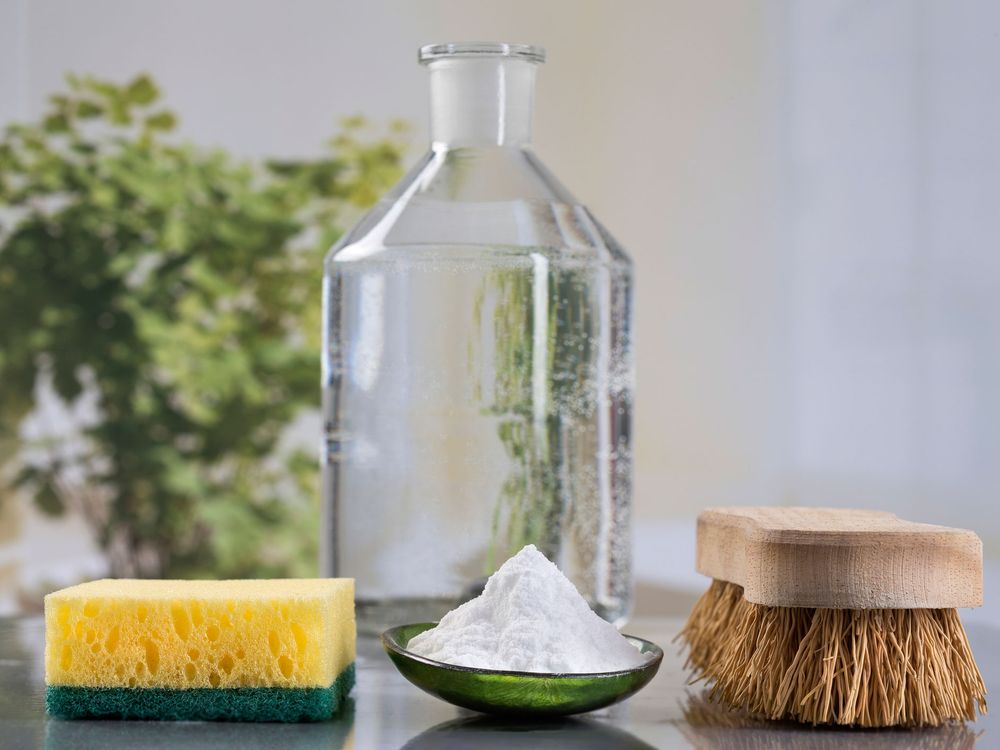
With white vinegar, you can (almost) clean everything at home. Our advice and tips for using it well, without any bad surprises.
Why bother with expensive cleaning products when you can use vinegar to clean everything around the house? The vinegar disinfects, deodorizes, degreases, prevents, and treats mineral stains (lime, tartar, etc.). All this in an ecological and health-friendly way.
For the professional cleaning services in Tacoma, You can take the services of Premier Janitorial. It is a well-known cleaning services company.
Which vinegar to use for the household?
Vinegar is a natural product that is made by fermenting fruits or grains. Alcohol vinegar, also known as white vinegar, contains 8% acetic acid and is ideal for cleaning (minimum 5 percent ).
It is found in supermarkets, very inexpensive. There is also organic. For surfaces in contact with food, we prefer edible vinegar (see info on the label).
For what uses?
Vinegar is an ecological multi-use product. It can be used for toilets, sanitary facilities, fridge, kitchen, cutting boards, windows, coffee makers …
It is often diluted in water. It is used cold or heated for more efficiency. In this case, we take care to protect ourselves well from the vapors of hot vinegar.
Do you dislike the smell? Macerate lemon and orange peels in the vinegar to flavor it naturally.
Uses:
- Sanitizing. The vinegar sanitizes surfaces such as cutting boards, worktops … A sponge soaked in vinegar is rubbed on the surface. Beware of sensitive surfaces. See precautions below .
- Anti-limescale. The vinegar is used to clean lime deposits from decanters, kettles, and faucets, among other things. Until washing, a vinegar solution is left to work for at least a quarter of an hour. You should “stick” a support (fine cloth, paper towel, or toilet paper) soaked in vinegar for several hours before cleaning areas that are difficult to reach, such as the showerhead and taps.
- Fabric softener. The vinegar softens the laundry and revives its colors. Place 1 glass of vinegar in the softener tray of the washing machine. The smell disappears on drying.
- Anti-scale for the iron. A soft, damp cloth is regularly passed over the sole to prevent deposits. You can also add a teaspoon of vinegar to the water in the iron.
- WC disinfectant. Vinegar is used to sustain, disinfect and deodorize toilets. You can heat the solution (3 cups of vinegar in a pot of boiling water) before rubbing vigorously. You can also make your toilet product from vinegar .
- Wash windows and mirrors. On window panes and mirrors, spray a solution composed of 1/3 vinegar and 2/3 water before wiping with a microfiber cloth.
- Disinfect the fridge. Pure vinegar is used on a sponge to eliminate bacteria and bad odors. Avoid rubber seals that vinegar can attack.
- Clean and deodorize the microwave oven. Fill the bottom of a bowl halfway with water and halfway with vinegar. The oven is preheated before being switched off. We wait about twenty minutes without opening the door; then we clean the dirt with a damp mop. For heavily soiled microwaves, a multi-purpose cleaner is also used .
- Maintain carpets. To clean it and revive its colors, you moisten your carpet or carpet with hot vinegar water. Then rub with a brush. We ventilate if necessary.
- Unblock and detach. To unclog a sink or clean encrusted stains, you can use vinegar and baking soda.
Precautions for use
- Vinegar should be avoided in certain cases:
- on natural stones such as marble, blue stones, cement, limestone, varnished surfaces, and other sensitive surfaces.
- On the rubber seals. We dilute the vinegar to avoid making them porous.
- On clothing elastics (panties, washable diapers, etc.) and certain synthetic linens.
- Never mix vinegar with bleach. Better, we avoid using bleach which gives off toxic vapors.
- We avoid adding vinegar to a base (soda crystals, baking soda) if we do not need the mixture’s effervescent reaction. The projections of the chemical reaction can irritate the eyes. And the mixture cancels the properties of each of the two products.
- In case of doubt, we always start by doing a test on a small corner of the surface to be cleaned to avoid any unpleasant surprises.
 DigiTexture